Reviews
Restaurant Reservation Platforms Compared for Independent US Restaurants
Restaurant reservation platforms compared: OpenTable, Resy and Yelp Guest Manager on fees, contracts and guest data for small independent US operators.
What to take away
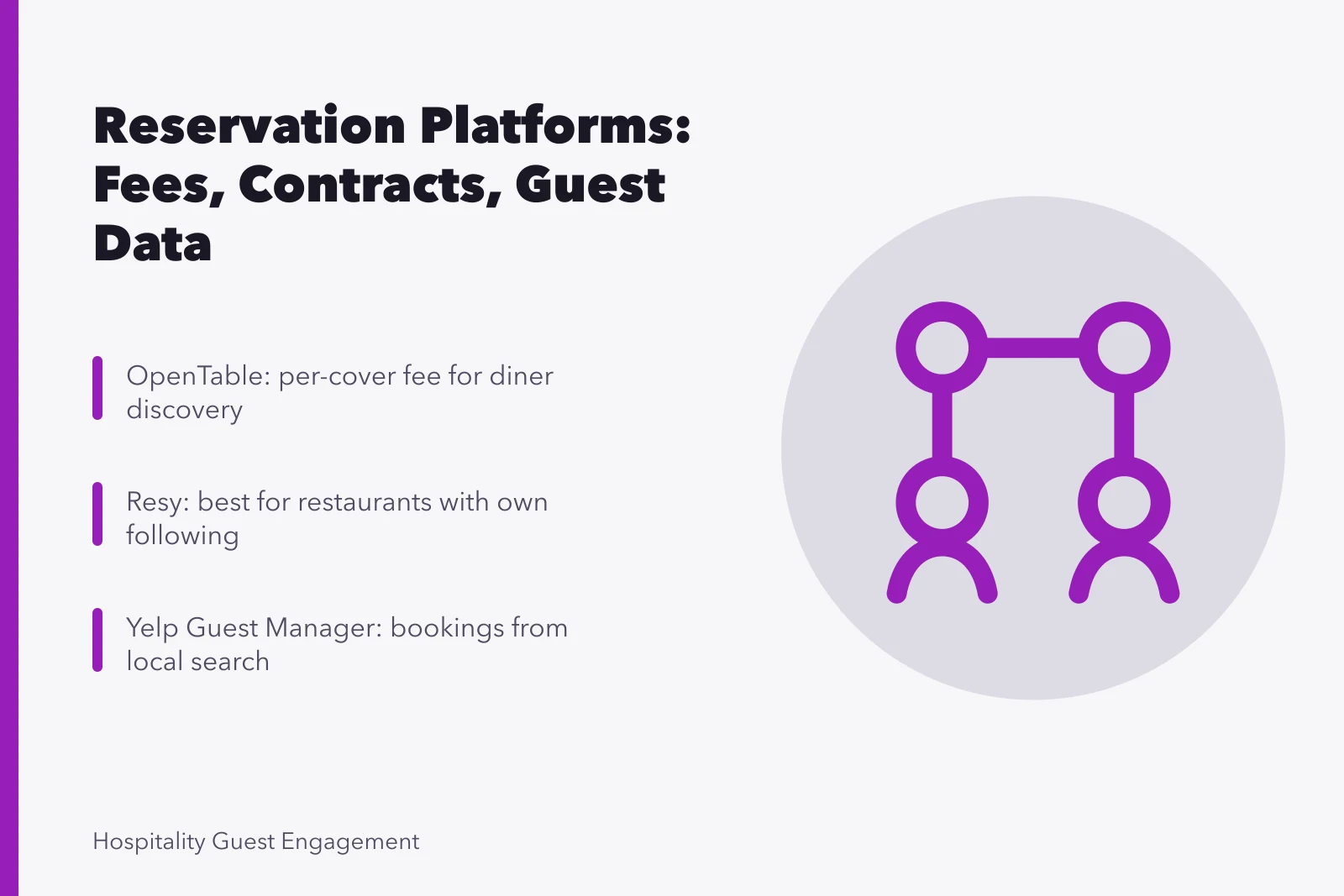
- OpenTable fits independents who need diner discovery and will pay a per-cover fee for it.
- Resy fits restaurants with a strong brand and a following that already books direct.
- Yelp Guest Manager fits operators whose reservations begin in local search results and reviews.
- Contract length, per-cover charges and ownership of the guest record matter more than the headline monthly fee.
- No platform here hands you a portable guest list without work, so plan the export before you sign.
Independent restaurants in the United States pick a reservation platform for one of a few reasons: they want strangers to find them, they want control of the guest record, or they already rank in local search.
What is being compared
Three platforms dominate the conversation among independents: OpenTable, Resy and Yelp Guest Manager. Each sells table management, confirmation texts and a diner database. Where they differ is where demand comes from.
OpenTable leans on volume from its own diner network. Resy leans on restaurant branding and editorial placement, with a following that skews younger and urban. Yelp Guest Manager ties bookings to a page collecting reviews and calls.
Review volume decides whether a guest taps your booking button, and hospitality reputation management covers how that shifts across a season.
The criteria that matter
What to check
- Discoverability
- Does the platform send diners?
- Fee structure
- Monthly fee, per-cover charge, caps
- Contract term
- Length, notice, auto-renewal
- Guest data
- Export format, ownership, opt-in
- Table tools
- Floor plan, turn times, waitlist
- Integrations
- POS, payments, search, delivery
Why it matters
- Discoverability
- Discovery is what you pay for, not software
- Fee structure
- A low fee plus per-cover charges can cost more
- Contract term
- Long terms outlast the fit
- Guest data
- The list is the asset you keep
- Table tools
- Weak tools push staff back to paper
- Integrations
- Manual re-entry costs labor every shift
Illustrative pricing, to confirm on each vendor's rate card: entry fees in the low hundreds of dollars per month per venue, plus per-cover charges from about $0.25 to $1.50.
Whether platform demand earns back the covers you give away is a measurement question, and hospitality marketing analytics sets out how to read the numbers without fooling yourself.
OpenTable for discovery-led bookings
OpenTable began as a diner-facing discovery network, and that model still shapes its contract terms. You get placement inside a network diners already open, plus a dashboard for turn times and waitlists. The trade is cost and control.
Ask about the cover cap and whether the per-cover fee applies when Google sent the diner.
Resy for restaurants with their own crowd
Resy suits a restaurant that already fills seats on reputation. Table management is sound and the platform handles tasting menus, ticketed dinners and deposits. Smaller markets can be thin, so if your diners do not use it you may pay fees without gaining discovery. Confirm what share of bookings arrive from the platform's own network before signing.
Yelp Guest Manager for search-led bookings
Yelp Guest Manager makes sense when bookings start with a search, a map result or a review page. Reservations sit beside the reviews that drove the click, and staff work from one queue. The risk is concentration: if review volume falls, bookings fall with it. Platform bookings can also mask whether your own restaurant marketing is doing the work.
Where each one wins
OpenTable wins when a restaurant is new to a market and needs strangers at the door. Resy wins when the brand is the draw and deposits or ticketed dinners matter. Yelp Guest Manager wins when local search and reviews already produce calls.
Which platform fits your demand
Where do bookings start?
Strangers need discovery -> OpenTable
Brand is the draw -> Resy
The marketing and sales guidance from the SBA is a useful check on whether a new subscription is the right spend at all.
- List the three reasons guests currently book with you.
- Match the platform to the dominant reason, not to the best sales call.
- Get fees, contract term and export terms in writing.
- Run both systems side by side for one full turn cycle before cancelling.
Ask what happens on the day you leave. The answer tells you who owns the guest relationship.
What none of them solve
No platform here fixes a weak offer, a thin review profile or a room that is hard to fill on a Friday. They route demand you already have, or they rent you demand you do not.
All three keep the guest record inside their system by default. Export formats vary, opt-in permissions often do not travel, and a list pulled on the way out is smaller than the list you thought you had. Guest records hold phone numbers and email addresses, so the FTC's data security guidance applies to how you store and share them.
A direct relationship through email or a guest loyalty program is slower to build and survives a switch. That asset is the part no platform takes back.